Flight Path Model
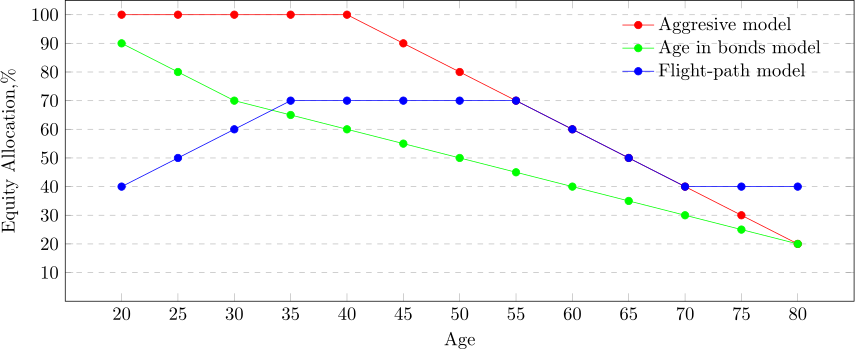
Rick Ferri proposed the “flight path” model for asset allocation, named because the equity allocation traces the path an airliner flies: a moderate stock weight at takeoff, a climb as experience accumulates, a long cruise at the level each investor’s needs and tolerance support, and a descent into a fixed landing allocation at retirement. His objection to the age-only formulas is that they assume every young investor is risk-tolerant and every retiree risk-averse, which fits neither how people behave nor what they need. The model fixes two things. It starts a new investor below their long-run equity weight and raises it gradually, so the first bear market arrives while the stake is still small enough to hold through. And it refuses to guess how long retirement will last: instead of a glide path that keeps de-risking, it holds one fixed allocation from the retirement date on.
See Figure 11.7 for comparison with TDFs.
The fixed post-retirement allocation is the part worth arguing about. A declining glide path that keeps de-risking through retirement leaves you most exposed to equities in the years immediately before the target date — which is precisely when sequence-of-returns risk peaks, since a large drawdown in the first few years of withdrawals does damage that later good returns cannot undo (section “The Default Sequence Is Wrong”). Ferri’s fixed allocation sidesteps that by refusing to guess a retirement length. Some researchers go further and advocate a rising equity glide path in retirement for the same reason. The common ground: what happens to your allocation in the five years either side of the retirement date matters more than its level two decades out.